E.ON Next Energy: A Comprehensive Guide to Tariffs, Reviews, and Services
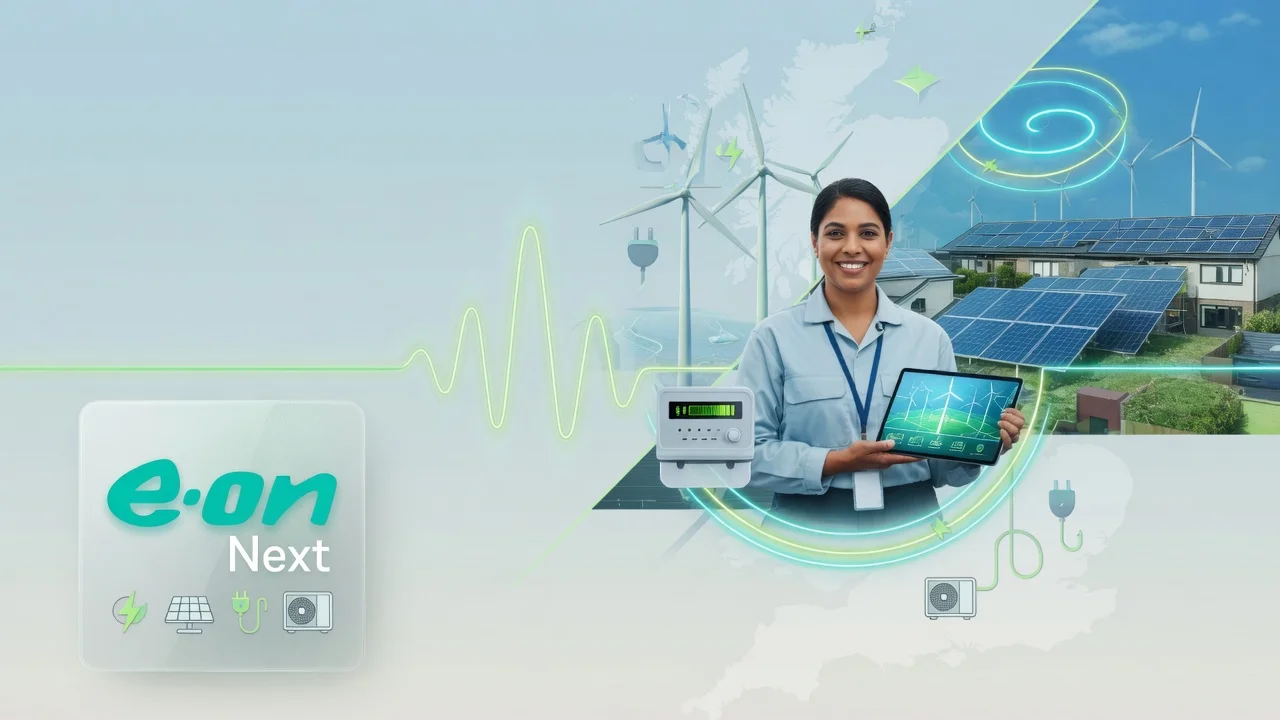
Choosing an energy supplier can feel like a complex task, with countless tariffs and features to compare. If you're exploring your options, you've likely come across E.ON Next. As one of the UK's most prominent energy providers, it represents the modern, customer-facing arm of the established E.ON UK brand, serving several million domestic gas and electricity customers across the country.
This in-depth guide will demystify E.ON Next, exploring its commitment to renewable energy, the variety of tariffs it offers, its customer service reputation, and the practical aspects of managing your account, with information updated for 2026.
1. What Makes E.ON Next Different?
E.ON Next positions itself as more than just a utility company. It aims to be a partner in creating a more sustainable and efficient home. Here are some of the core principles that set it apart:
- 100% Renewable Electricity: A significant draw for many customers is that E.ON Next provides 100% renewable electricity as standard across its domestic tariffs. This means the electricity you use is matched with power generated from sources like wind, solar, and biomass, backed by Renewable Energy Guarantees of Origin (REGOs), at no additional cost.
- The Power of a Major Group: While operating with a fresh, modern approach, E.ON Next benefits from the stability and extensive infrastructure of the wider E.ON group, one of Europe's largest energy network operators. This provides customers with the reassurance of dealing with an established, financially secure company.
- Focus on Home Energy Solutions: Beyond just supplying energy, the company provides a range of home efficiency solutions. Customers can often access discounts on products and services such as new, A-rated boilers, solar panel and battery installations (including its "Next Optimise" solar offering), air source heat pumps, and electric vehicle home charging points.
- Dedicated Service: E.ON Next emphasises a customer-centric approach, often assigning customers to dedicated Energy Specialists. The goal is to provide greater continuity and a more personal level of support when you need to get in touch.
- Workplace Recognition: E.ON Next has been recognised in The Sunday Times Best Places to Work awards, ranking among the UK's top employers for the second year running in 2026, which the company points to as a sign of a motivated workforce delivering better customer service.
2. Exploring E.ON Next's Energy Tariffs
E.ON Next provides a diverse range of tariffs designed to suit different lifestyles, budgets, and priorities. The line-up has evolved over the past year, with new options now catering specifically to heat pump owners and households wanting more flexibility when moving between deals. Understanding these options is key to finding the best fit for your household.
| Tariff Category | Best For | Key Features |
|---|---|---|
| Fixed Rate Tariffs | Those who want budget certainty and protection from price volatility. | Your price per unit of energy (kWh) and standing charge are locked in for a set period, typically 12 or 24 months (currently marketed as the 12-Month Fixed and Next Online ranges). This means your rates won't change, though your total bill will still vary with your usage. An exit fee of around £50 per fuel usually applies if you leave the contract early, though this is waived in the final 49 days of the term. |
| Standard Variable Tariff (SVT) | Customers who value flexibility and don't want to be tied into a contract. | Known as 'Next Flex' (also referred to as Next Online), the price of this tariff rises or falls in line with Ofgem's energy price cap, which is reviewed quarterly. There are no exit fees, so you are free to switch to another tariff or supplier at any time. |
| Tracker Tariffs | Savvy customers who are willing to accept some rate movement for a guaranteed discount versus the cap. | 'Next Pledge' is a 12-month fixed-term tracker tariff designed to stay a guaranteed amount below the Ofgem price cap, with the discount having recently been doubled to around £100 a year for an average dual-fuel household. Rates still move when the cap is updated each quarter, and a modest exit fee (typically around £25 per fuel) applies if you leave early — though E.ON Next has removed internal exit fees for Pledge customers who want to switch onto one of its own fixed deals later. |
| Electric Vehicle (EV) Tariffs | Owners of electric vehicles who charge their car at home. | The 'Next Drive' tariff offers significantly cheaper electricity rates during off-peak, overnight hours (commonly midnight to 6am or 7am, depending on the version). This allows EV owners to dramatically reduce their vehicle charging costs, with some smart variants now offering automated overnight charging. These tariffs are typically fixed for a year and may come without exit fees, though they generally require a working smart meter. |
| Heat Pump Tariffs | Households that have switched from a gas boiler to an air source or ground source heat pump. | 'Next Heat Pump' offers a lower whole-day electricity unit rate designed to offset the higher electricity consumption that comes with running a heat pump. Eligibility is usually gated behind a heat pump declaration and a meter check, so it's best suited to homes where the installation is already registered with the supplier. |
| Export Tariffs | Households with solar panels (and increasingly battery storage) who want to be paid for excess electricity sent back to the grid. | The 'Smart Export Guarantee' tariff pays customers for surplus renewable electricity exported to the grid, typically requiring a smart export meter. E.ON Next's "Next Optimise" proposition is also designed to help solar households understand and maximise the value of their generation. |
| Prepayment & Smart Pay As You Go | Households that prefer to pay for energy upfront to manage their budget closely. | Prepayment tariffs involve topping up a meter using a key or card, or remotely via the app for Smart Pay As You Go customers. Top-ups can be made via the app, in shops, post offices, or at service stations. These tariffs generally do not have exit fees, though pricing and availability can differ from Direct Debit tariffs. |
It's worth noting that the Ofgem price cap continues to move with the wholesale market, and E.ON Next's fixed and tracker tariffs are regularly repriced in response. As of mid-2026, the cap was set to rise significantly from July, driven mainly by higher wholesale gas costs, which has made E.ON Next's better fixed deals and the Next Pledge tracker noticeably cheaper than simply remaining on the default Next Flex/Online tariff. Always compare the live rates for your region and usage before deciding, as prices can change from one quarter to the next.
3. Customer Service and Reviews
An energy supplier's reputation for customer service is a critical factor for many, and reviews for E.ON Next remain something of a mixed picture depending on where you look.
On Trustpilot, E.ON Next Energy Ltd continues to hold a strong overall rating — generally sitting between "Great" and "Excellent" (around 4 to 4.5 out of 5) — based on a very large and growing number of reviews, now numbering in the hundreds of thousands. Many recent reviews praise quick, friendly switching processes, clear communication about tariff renewals, and staff described as polite and easy to understand. At the same time, other independent surveys paint a less flattering picture: for example, recent Which? customer satisfaction surveys have placed E.ON Next in the lower half of UK suppliers for overall service and value for money, and some Trustpilot reviews highlight frustrations such as long waits for callbacks, difficulty reaching the right department, and slow resolution of billing or metering disputes.
Common themes in positive feedback often highlight helpful and efficient interactions with customer service agents over the phone, smooth switching experiences, and clear in-app communication about tariff changes. Conversely, negative reviews tend to focus on delays resolving more complex issues — particularly metering, billing discrepancies, and EV charger installation problems — as well as occasional difficulty getting through to the correct team. On balance, its public feedback places it broadly in line with, or slightly ahead of, several other large suppliers, though it generally trails specialist digital-first suppliers on dedicated satisfaction surveys.
4. Managing Your E.ON Next Account
E.ON Next offers several digital tools to make managing your energy account straightforward.
- The E.ON Next App: Available on both iOS and Android, the app is a central hub for your account. You can use it to view your bills, make payments, monitor your energy usage, and submit meter readings. For Pay As You Go customers, it's an easy way to top up credit, and for smart meter customers it increasingly offers more detailed half-hourly usage data.
- Submitting Meter Readings: If you don't have a smart meter, you can submit readings easily through the app or by logging into your online account. This ensures your bills are accurate and based on your actual usage, rather than estimates.
- Smart Meters: E.ON Next continues to roll out smart meters to its customers across the UK, having now installed several million SMETS2 devices. These meters automatically send your gas and electricity readings to the supplier, eliminating the need for manual submissions and providing near real-time usage data. You can typically book a free installation appointment through your online account or by phone. A working smart meter is now effectively required to access time-of-use tariffs such as Next Drive and to benefit fully from the Next Pledge and Next Heat Pump ranges.
- Warm Home Discount: E.ON Next participates in the government's Warm Home Discount scheme, providing a one-off rebate (around £150) on the electricity bills of eligible low-income households. Eligibility for the scheme has broadened over time, with many qualifying customers now identified automatically through data-matching with the Department for Work and Pensions, rather than needing to apply directly.
5. How to Contact E.ON Next
If you need to get in touch with E.ON Next, there are several channels available:
| Method | Contact Detail | Operating Hours |
|---|---|---|
| Phone (general enquiries) | 0808 501 5200 | Monday–Thursday: 9am–5pm, Friday: 9am–4pm |
| Phone (emergency, prepayment/credit meters) | 0808 501 5088 | Available after 5pm and at weekends |
| Smart Meter Bookings | 0808 501 5266 | During standard opening hours |
| 0808 5015 2000 | - | |
| hi@eonnext.com | For general enquiries | |
| unhappy@eonnext.com | For making a complaint | |
| App/Website | - | Available 24/7 for account management |
If your query isn't urgent, the app and online account are usually the fastest way to get answers, as phone lines can experience longer waits during busy periods.
6. Frequently Asked Questions
What is the relationship between E.ON and E.ON Next?
E.ON Next is the domestic energy supply part of the wider E.ON UK group. Most of E.ON's original residential customers were migrated over to the E.ON Next brand, which is focused on providing simpler, greener energy tariffs and a more modern, app-led customer experience.
Does E.ON Next charge for leaving a contract early?
If you are on a fixed-term tariff, you will likely be charged an exit fee — typically around £50 per fuel (gas and electricity) — if you switch to another provider before the end of your contract. The Next Pledge tracker tariff carries a smaller exit fee, often around £25 per fuel, although E.ON Next has removed the internal exit fee for Pledge customers who choose to move onto one of its own fixed deals. Exit fees do not apply if you are within the last 49 days of your contract period, and customers on variable (Next Flex/Online) or prepayment tariffs do not pay exit fees at all.
How do I switch my energy supply to E.ON Next?
Switching is a simple process. You can use an energy comparison site or get a quote directly from the E.ON Next website by entering your postcode and current usage. Once you choose a tariff and sign up, E.ON Next will handle the entire switching process with your old supplier under the Energy Switch Guarantee, which typically takes around five working days plus a statutory 21-day cooling-off period during which you can cancel free of charge. There will be no interruption to your energy supply during the switch.
Is E.ON Next a green energy provider?
E.ON Next supplies 100% renewable electricity across its domestic tariffs as standard. This is backed by Renewable Energy Guarantees of Origin (REGOs), which certify that the equivalent amount of electricity you use has been generated from renewable sources, such as wind farms and solar installations, in the UK.
Will my bill go up if the Ofgem price cap rises?
If you're on a variable tariff such as Next Flex/Online, your unit rates will move in line with Ofgem's price cap, which is reviewed each quarter. Tracker-style tariffs like Next Pledge also move with the cap but are designed to stay a set amount below it for the duration of the contract. Fixed tariffs protect you from cap increases for the length of your fixed term, but they won't automatically fall if the cap drops, so it's worth reviewing whether your fixed rate still represents good value as your renewal date approaches — E.ON Next will normally contact you ahead of time with renewal options.
What should EV owners and heat pump owners look out for?
If you charge an electric vehicle at home, the Next Drive tariff can offer substantial savings through cheaper overnight electricity rates, though it's best suited to households that do most of their charging at home overnight rather than at public chargers or at work. If you've replaced a gas boiler with a heat pump, the Next Heat Pump tariff offers a lower flat electricity rate designed to offset higher overall electricity use, but you'll typically need to register your heat pump installation and have a working smart meter to be eligible.