A Comprehensive Guide to Fuse Energy: The Modern UK Supplier
In the ever-shifting landscape of the UK energy market, new suppliers are constantly emerging to challenge the status quo. One of the most talked-about entrants is Fuse Energy, a provider that blends competitive pricing, a strong commitment to green energy, and a thoroughly modern, app-first approach to customer service.
But is it the right supplier for your home? This guide will explore everything you need to know about Fuse Energy, from its tariff structures and pricing philosophy to its unique features and customer support model, with the latest information available as of June 2026.
1. What Makes Fuse Energy Stand Out?
Launched in 2022, Fuse Energy entered the market with a clear mission: to simplify the energy experience, accelerate the transition to renewables, and offer consistently fair prices. Unlike many traditional suppliers, Fuse operates on a digital-first basis, leveraging technology to streamline account management and communication. Since its launch, Fuse has expanded from an electricity-only proposition into a full dual-fuel supplier, now offering gas alongside its electricity tariffs to households across the UK.
Several key pillars define its offering:
- Competitive Pricing: A core tenet of Fuse's strategy is to keep its tariffs priced below the rates offered by the UK's 'Big Six' suppliers and to consistently undercut the Ofgem energy price cap. The company tracks competitor pricing closely to maintain this positioning.
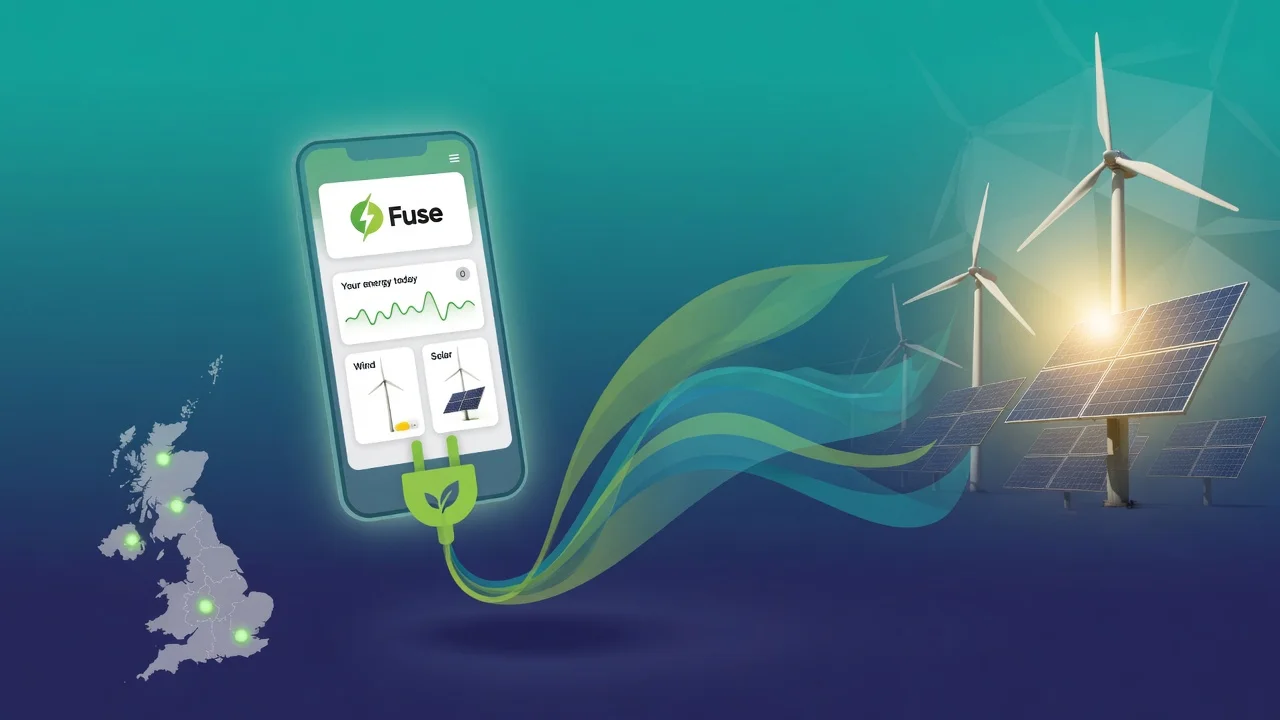
- Genuine Green Credentials: Fuse isn't just a reseller of green energy. The company actively owns and operates its own renewable generation sites, including wind and solar farms across the UK. It also reinvests its profits into developing new green energy projects worldwide.
- Digital Account Management: All aspects of your account, from submitting meter readings to contacting support, are handled through a dedicated mobile app or a web-based portal. This removes the need for paper bills and call centre queues.
- Innovative Features: Fuse offers unique benefits, such as the ability to manage the energy supply for multiple properties under a single login—a significant advantage for landlords or those managing a relative's bills. Customers can also take their protected Fuse tariff with them when they move house, avoiding the need to re-shop for a deal after relocating.
2. An In-Depth Look at Fuse Energy Tariffs
Fuse Energy provides a versatile range of tariffs designed to cater to different household needs and energy consumption patterns. As of mid-2026, Fuse offers six tariffs in total: three time-of-use (multi-rate) tariffs and three single-rate tariffs, covering both electricity and gas.
For Predictable Budgeting: Fixed-Rate Tariffs
For those who value price certainty, Fuse offers fixed-rate deals. These tariffs lock in your unit rates and standing charges for a set period, typically 12 or 15 months. This means that no matter how the wholesale energy market fluctuates, your per-unit cost remains the same, protecting you from unexpected price hikes. It's an ideal choice for households that prefer to budget their energy costs accurately over the medium term. Thanks to Ofgem's ban on acquisition-only tariffs, any competitively priced fixed deal Fuse advertises is also available to its existing customers, not just new sign-ups.
For Flexibility: Standard Variable Tariffs (SVTs)
Fuse's standard variable tariff offers more flexibility, as it doesn't tie you into a long-term contract. The unit rates and standing charges on this tariff move in line with the Ofgem price cap, which is reviewed quarterly. While this means prices can go up or down, Fuse aims to keep its SVT priced competitively, usually a few percentage points below the official cap.
For Smart Savers: Time-of-Use (TOU) Tariffs
Also known as multi-rate or off-peak fixed tariffs, these plans are designed for customers who can shift a significant portion of their energy consumption to off-peak hours. With these tariffs, you have multiple unit rates depending on the time of day, with electricity costing less during off-peak periods and more during peak times. At Fuse, off-peak hours run from 00:30 to 07:30 GMT. This can lead to substantial savings for those with electric storage heaters, home batteries, or anyone who can schedule high-consumption activities like running the washing machine or dishwasher overnight.
For Electric Vehicle Owners: Smart EV Tariffs
Recognising the growing number of EV drivers, Fuse has a dedicated tariff that offers a window of super-cheap electricity overnight. This five-hour period is specifically designed for charging an electric vehicle at the lowest possible cost, and Fuse's app can automate charging so it runs entirely within this off-peak window, making it a highly attractive option for EV owners looking to minimise their running costs.
3. How Does Fuse Energy's Pricing Compare?
Fuse Energy has built its reputation on being one of the most competitively priced suppliers on the market. Their standing charges and unit rates are frequently lower than the maximum allowed under the Ofgem price cap.
For context, here are the latest Ofgem price cap figures, which came into effect on 1 July 2026 and run to 30 September 2026. This represents a 13% rise compared to the previous quarter, driven largely by higher wholesale gas prices linked to the ongoing conflict in the Middle East:
| Charge Type | Ofgem Price Cap (Q3 2026: Jul–Sep) |
|---|---|
| Electricity Unit Rate | 26.11p per kWh |
| Electricity Standing Charge | 57.19p per day |
| Gas Unit Rate | 7.33p per kWh |
| Gas Standing Charge | 29.04p per day |
A typical dual-fuel household paying by Direct Debit can now expect to pay around £1,862 per year under the cap, up roughly £221 on the previous quarter. Fuse's fixed tariffs have historically been priced a few percentage points below these cap levels, and the supplier has consistently positioned its deals among the cheapest fixed-rate options on the market throughout 2025 and into 2026.
Note: Exact tariff rates vary by region and change regularly. Always get a personalised, postcode-based quote before switching.
It's also worth being aware of exit fees, which have increased since Fuse first launched. If you are on a fixed-rate tariff and decide to switch to another supplier before the final 49 days of your contract, Fuse now charges a £100 exit fee for a dual-fuel switch (this was previously £50 for a single fuel).
4. A Truly Green Supplier
Fuse Energy's commitment to sustainability goes beyond simply offering 100% renewable electricity. The company is actively involved in the generation of clean power. It owns and operates solar and wind projects with a capacity of 18MW, enough to power approximately 36,000 homes annually.
Furthermore, Fuse reinvests 100% of its profits into new renewable energy infrastructure. They also provide an end-to-end solar panel installation service for commercial properties, managing everything from the initial design and grid connection applications to the final construction, alongside heat pump installation services for businesses and homes looking to move away from fossil fuel heating.
5. The Customer Service Experience
Fuse has adopted a fully digital approach to customer support, which remains a key point of difference even as the company has grown.
- No Call Centre: You cannot phone Fuse Energy for support, and the company describes itself as one of the few UK suppliers offering round-the-clock service entirely without a phone line.
- App and Web Support: The primary way to get in touch is via the 24/7 live chat feature within the mobile app or your online account, which Fuse markets as offering "super-fast response times".
- Email: For less urgent queries, you can contact their support team at support@fuseenergy.com.
This model continues to perform well with customers. As of mid-2026, Fuse holds an "Excellent" 4.7-star rating on Trustpilot from nearly 5,000 reviews, up significantly from the few hundred reviews it had at launch. Customers frequently praise the helpfulness and efficiency of the support team and the savings they have achieved compared with standard variable tariffs from larger suppliers. The most commonly cited drawbacks remain the lack of an emergency phone line and the variable, rather than fixed, monthly Direct Debit—though Fuse has indicated that a fixed Direct Debit option is in development.
Fuse's resilience has also been tested by real market events. The supplier maintained its pricing and service levels through the 2026 wholesale gas price spike linked to tensions around the Strait of Hormuz, which is seen as a partial test of its hedging strategy and a reassuring sign for customers concerned about supplier stability following the wave of supplier collapses in 2021.
6. Switching to Fuse Energy
The process of moving your supply to Fuse is designed to be as seamless as possible. The company claims you can complete the initial sign-up in just three minutes.
- Get a Quote: You can start by entering your postcode on the Fuse Energy website or by using a trusted energy comparison service.
- Choose Your Tariff: Select the plan that best suits your needs from the available options, considering price, flexibility, and any special features such as EV charging or off-peak rates.
- Sign Up: You can complete the sign-up process via the website, but Fuse encourages new customers to download their app for the best experience.
- Let Fuse Handle the Rest: Once you've signed up, Fuse will manage the entire switch with your old supplier. You will be kept informed of the progress, and there will be no interruption to your gas or electricity supply. As with any switch, you will have a 14-day cooling-off period in which to change your mind.
7. Frequently Asked Questions
Who owns Fuse Energy?
Fuse Energy is a start-up supported by a consortium of venture capital investors, some of whom were early backers of well-known tech companies like Spotify and Uber. Former Formula 1 champion Nico Rosberg is also a notable investor in the company.
Can I get a smart meter with Fuse?
Yes. Existing and new customers can request a smart meter installation directly through the Fuse Energy mobile app.
What if I have a prepayment meter?
Currently, Fuse Energy does not support prepayment meters. Payment is handled via a variable Direct Debit, which adjusts each month based on your actual energy usage, rather than a fixed monthly estimate. A fixed Direct Debit option has been signalled as a future addition, but is not yet available.
Is Fuse Energy financially stable?
As a relatively new and fast-growing supplier, Fuse is fully Ofgem-licensed and is required to hold capital reserves above regulatory minimums, like all licensed suppliers. While no supplier can be guaranteed never to fail, the energy market has stabilised considerably since the 2021 crisis, and the Supplier of Last Resort scheme ensures that customers of any failed supplier have their credit ringfenced and their supply transferred automatically with no interruption.
How do I leave Fuse Energy?
You can cancel your supply by simply switching to a new provider. If you are on a fixed-rate tariff and still within your contract period (but not in the last 49 days), you will be required to pay the £100 dual-fuel exit fee.
8. The Verdict
Fuse Energy presents a compelling option for a specific type of consumer. If you are tech-savvy, comfortable managing your account via an app, and prioritise both low costs and strong green credentials, Fuse is an excellent choice. Its competitive pricing, innovative features like multi-property management and automated off-peak EV charging, and genuine investment in renewables set it apart, and its track record of holding prices steady through a 2026 wholesale price shock has added to its credibility as a stable, long-term option.
However, if you strongly prefer speaking to someone over the phone for support, need a prepayment meter, or require the predictability of a fixed monthly Direct Debit, its digital-only and (currently) variable payment models may not be the perfect fit. Overall, Fuse Energy remains a forward-thinking supplier that is successfully carving out a niche in the competitive UK market, and one that is increasingly worth comparing against established names like Octopus Energy, OVO Energy and E.ON Next when you next consider switching.